

Key Factors Affecting Trial Conversion for Subscription Businesses
A deep dive into the key drivers of trial-to-paid conversion—a few real-world examples, and the emerging trends shaping the future of SaaS growth.

For SaaS businesses, converting free trial users into paying customers is what determines success in the long run.
Unlike freemium users, trial users have already made a commitment—they've signed up, they're testing the waters, and they're actively engaging with your product. The critical question is: What ultimately tips them over the edge to become paying customers?
The answer lies in systematically optimizing the user experience across the entire trial period. In this guide, I'll break down the key factors that influence trial-to-paid conversion, along with a practical playbook of actionable strategies you can implement immediately.
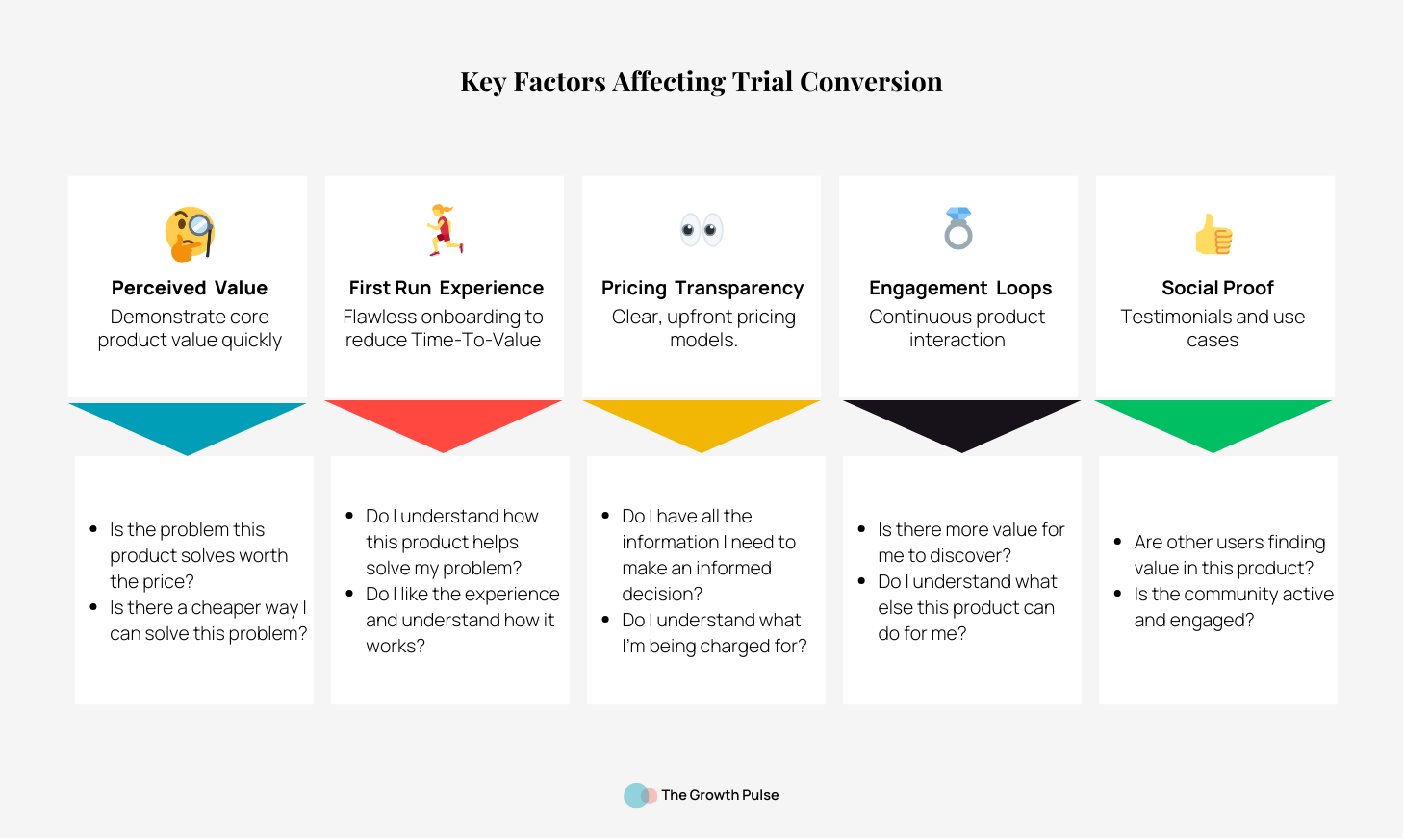
1. Perceived Value During the Trial Period
If users don't clearly understand your product's value by the end of the trial, conversion becomes nearly impossible. It's that straightforward.
A smart way to assess how users perceive your product’s value is to talk to them—especially across different stages of usage (new, casual, and power users) and ask them the following questions:
What's the maximum price you'd be willing to pay for this product?
Helps get a sense of the ceiling of perceived value.
At what price would this product feel like a "steal"?
Reveals the lowest price at which value outweighs cost.
What outcome makes this product indispensable to you?
Surfaces the moments that drive stickiness and willingness to pay.
The ultimate goal is to transform the user's perspective—shifting from "What do I gain if I upgrade?" to "What do I lose if I don't?" When your product becomes embedded in their workflow or daily life, the idea of walking away feels like a significant step backward.
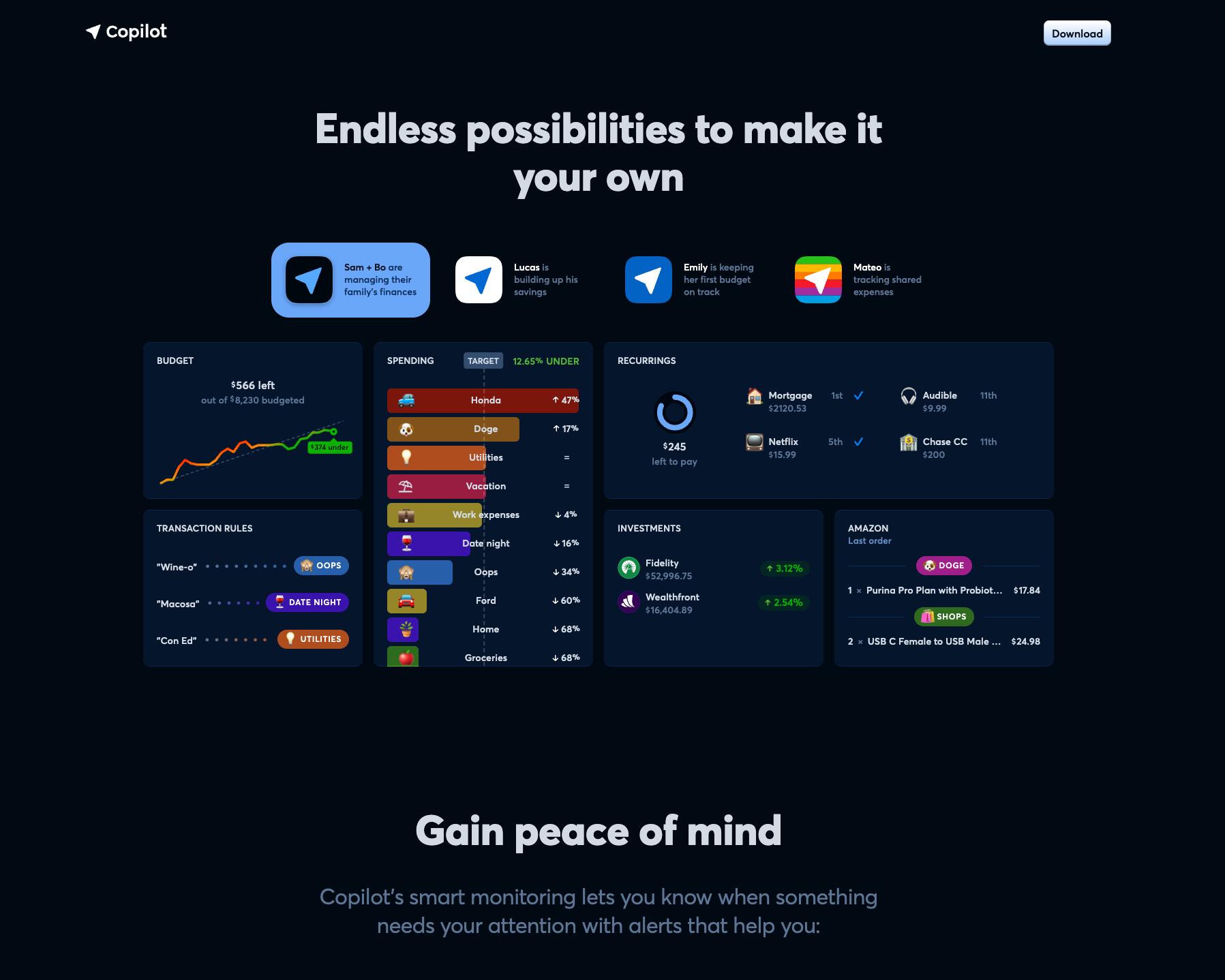
Example: Copilot Money
Copilot Money provides trial users full access to its financial tracking platform from day one. Users immediately experience real-time transaction categorization, predictive cash flow analysis, and AI-powered financial recommendations. It's not just a demo—it's comprehensive financial clarity.
By the trial's end, the conversation changes. Instead of "How much does this cost?", users are asking, "Can I really go back to not having control over my finances?" Suddenly, the subscription feels like a minimal investment in peace of mind.
2. Trial-Optimized Onboarding & Time-to-Value
Trial users are racing against the clock. If they don't encounter their "aha moment" quickly, they'll lose interest and drift away.
Effective onboarding must be laser-focused on helping users realize value rapidly. This means:
Eliminating unnecessary friction.
Highlighting critical features.
Providing a clear path to user success.
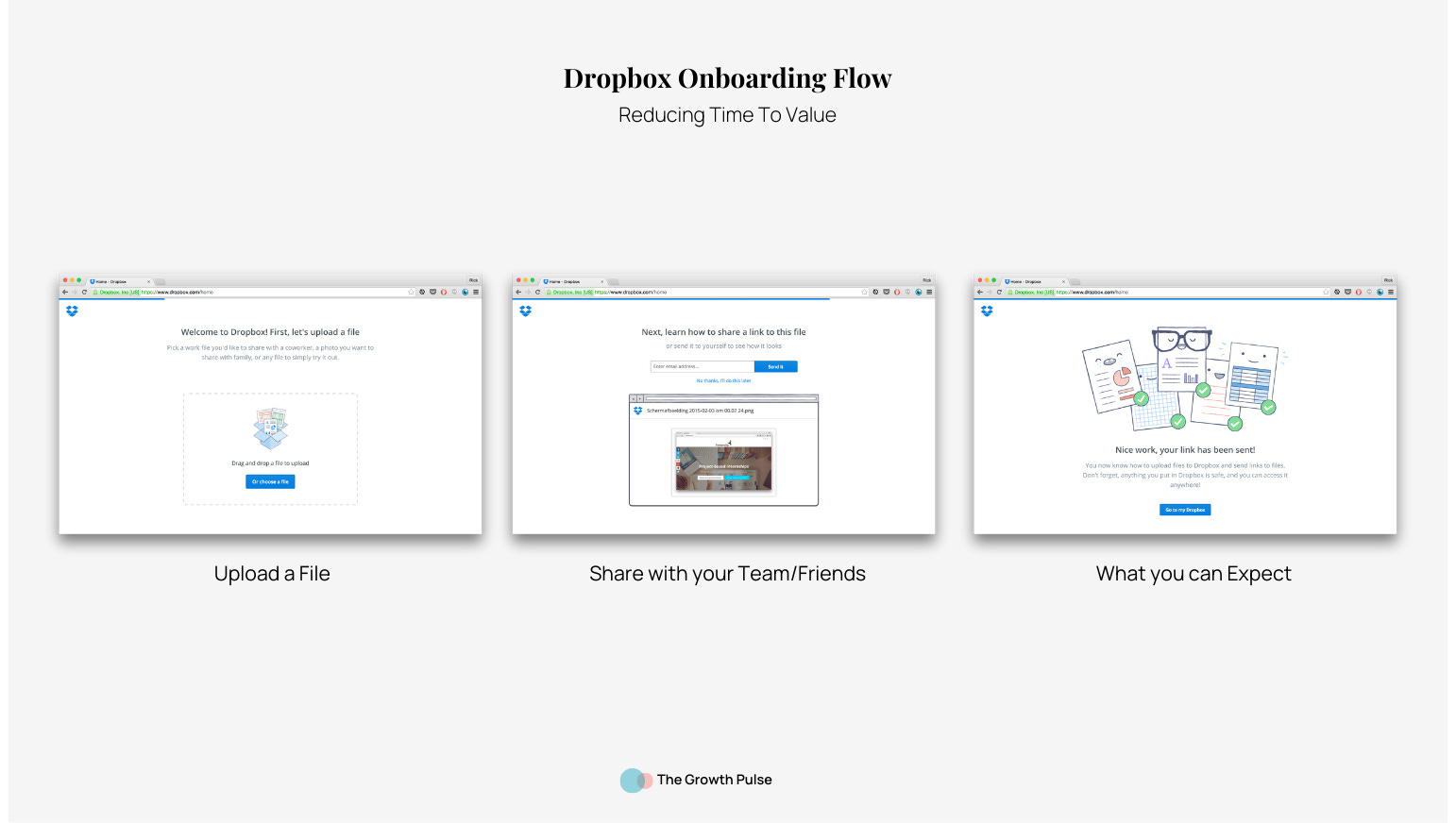
Example: Dropbox
Dropbox prompts users to invite team members immediately, so users realize the collaboration nature of the product (of course, a user who shares a file with someone else has a lower probability of churning at the end of the trial).
3. Trial Experience & Engagement Loops
Even with an intuitive product, users often need gentle nudges to continue exploring. You need strategic mechanisms to re-engage users and maintain their momentum throughout the trial period.
Example: Monday
Monday excels by sending targeted progress updates and behavioral nudges to trial users. These communications remind users of their progress and continuously highlight the potential of unlocking full product value.

4. Pricing Transparency & Trial Models
No one likes surprises, especially when it comes to pricing. Users should have complete clarity about what they're getting, its cost, and the timeline.
Current trial models show interesting conversion dynamics:
Opt-out trials (card upfront): Higher conversion rates (48.8%) but increased churn risk.
Opt-in trials (no card required): Lower conversion rates (18.2%) but stronger trust and long-term retention potential.
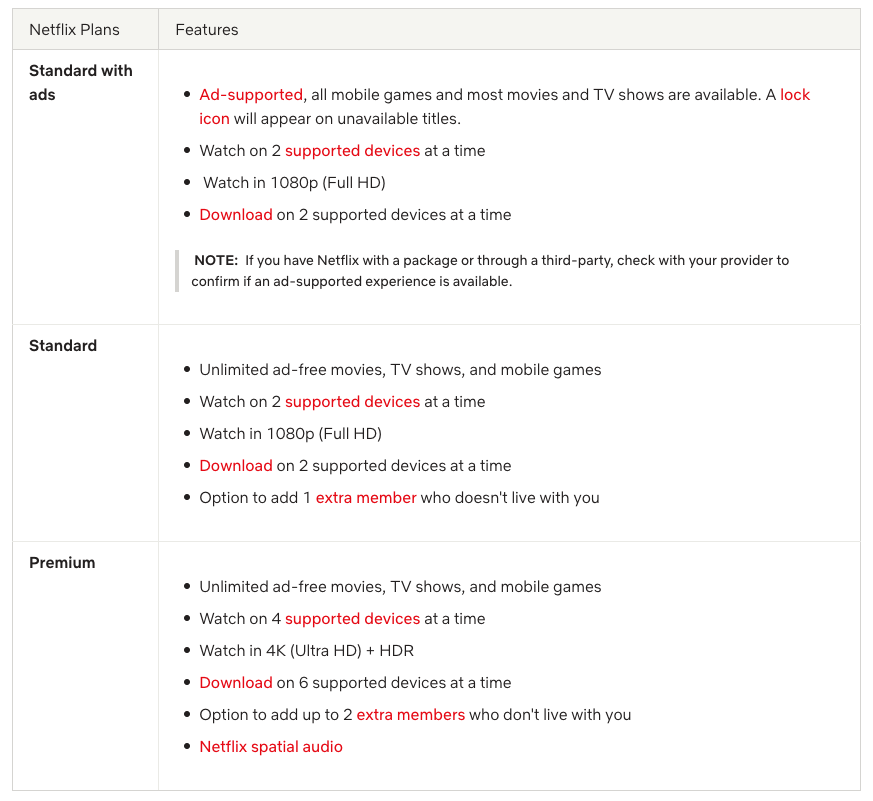
Example: Netflix's Evolution
Netflix originally employed an opt-out model but pivoted after experiencing customer churn. Their strategic shift focused on content personalization to drive reactivation and sustained engagement.
5. The Power of Social Proof
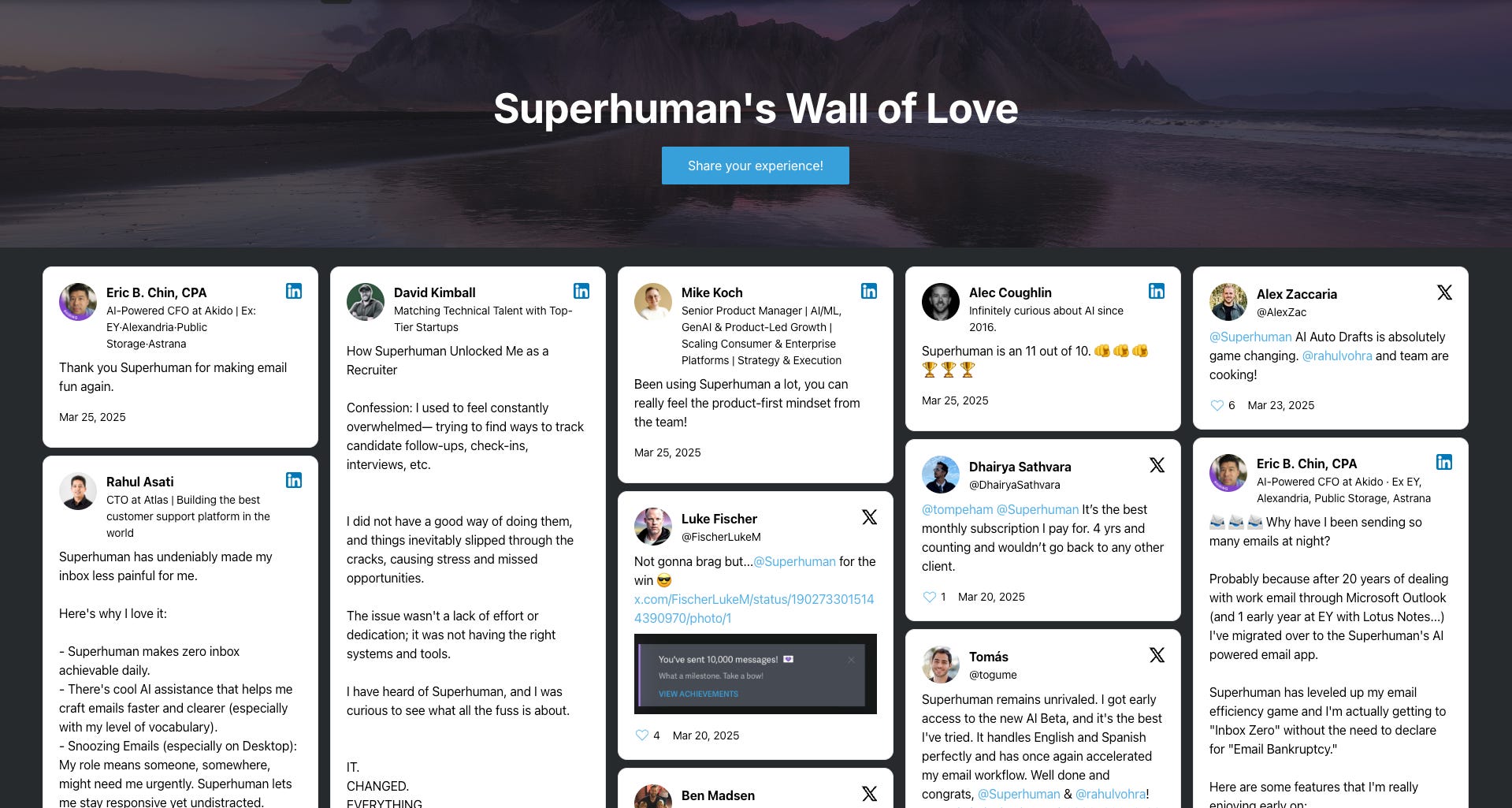
Social proof plays a crucial role in shaping trial conversion outcomes. For trial users—especially those evaluating a new category or unfamiliar brand—seeing others succeed with the product reduces perceived risk and builds confidence.
Psychologically, it creates a sense of belonging: "People like me use and benefit from this product." This not only validates their decision to try it, but also encourages continued engagement.
Strong forms of social proof include:
Customer testimonials and ratings embedded throughout the trial experience
Industry-specific case studies that showcase tangible outcomes
An active community where users can ask questions, share wins, and learn from others
Feeling supported and not alone is a powerful motivator. When users see real people achieving success—and have a place to ask questions and get help—it increases their likelihood to stick around and convert.
In this article I break down “How top SaaS companies turn Free users into Paid customers (and why Some Free users are more valuable than you think)”
Emerging Trends in SaaS Trial Conversions
SaaS companies are getting really sophisticated in how they approach new user onboarding and profiling. During my research I identified key trends that are worth looking into:
1. Personalization at Scale
The era of generic, one-size-fits-all trials is definitively over. Successful SaaS companies are now creating hyper-personalized trial experiences that align directly with specific user personas and use cases. This means moving beyond surface-level customization to deeply understanding and addressing individual user needs.
Key Personalization Strategies:
Dynamic onboarding flows based on user role.
Customized feature recommendations.
Intelligent path optimization based on user behavior.
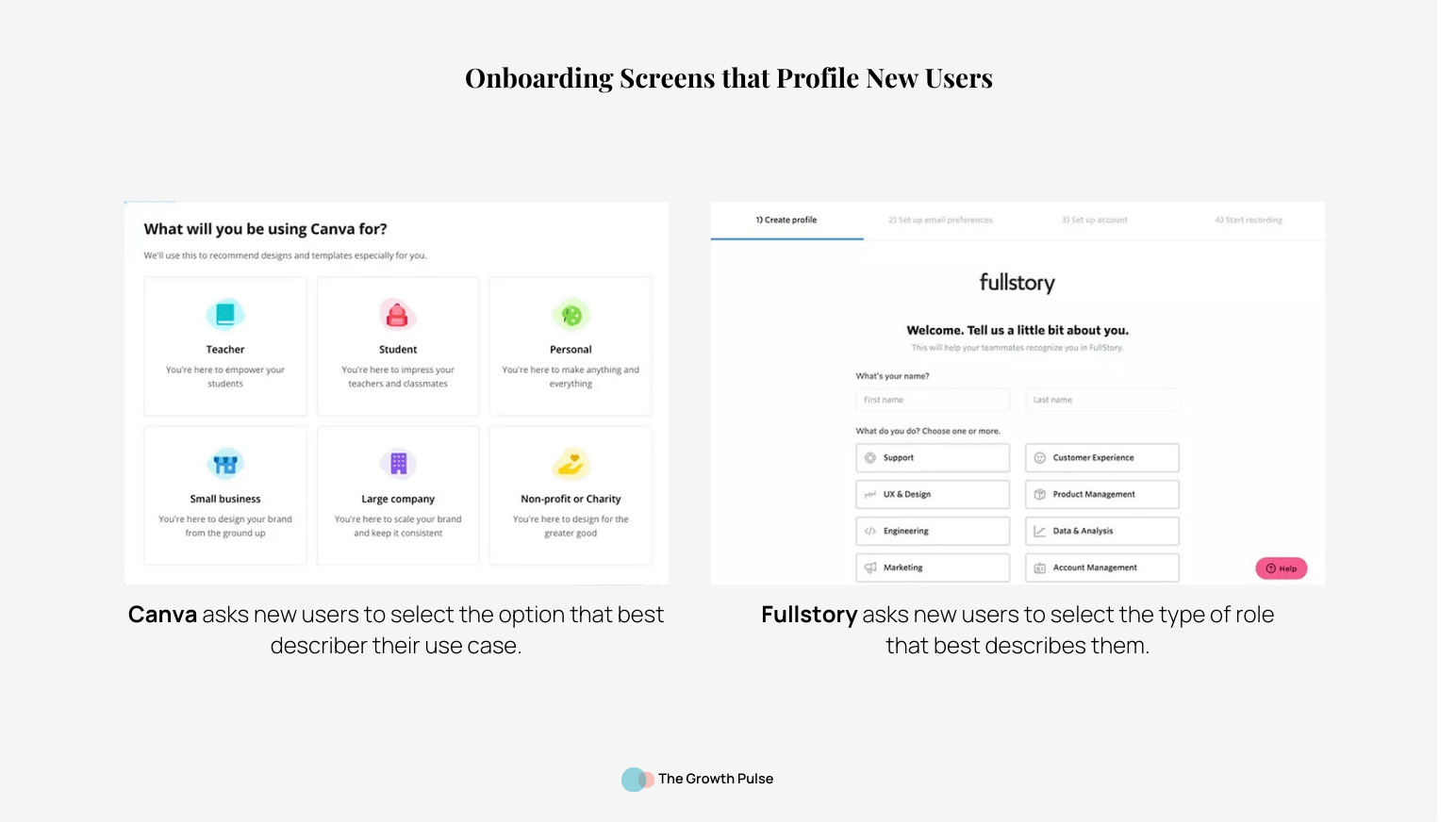
A great example of this is how Canva and Fullstory (among many other SaaS applications) profile new users based on their role or use case.
2. AI-Driven Trial Optimization
Machine learning is revolutionizing trial conversions. We're witnessing a paradigm shift where predictive analytics can now forecast user conversion likelihood with remarkable accuracy. By analyzing real-time engagement patterns, product teams can create intelligent, adaptive trial experiences that dramatically improve conversion rates.
Emerging AI Applications:
Predictive engagement scoring.
Real-time intervention recommendations.
Automated personalization of trial experiences.
3. Hybrid Engagement Models
The future of trial conversions transcends the traditional high-touch versus low-touch debate. The most effective approach is creating intelligent, adaptive engagement models that seamlessly blend automated interactions with ad hoc human touchpoints.
Hybrid Model Components:
Automated onboarding workflows.
Contextual human support triggers.
AI-powered recommendation engines.
Personalized check-in touchpoints.
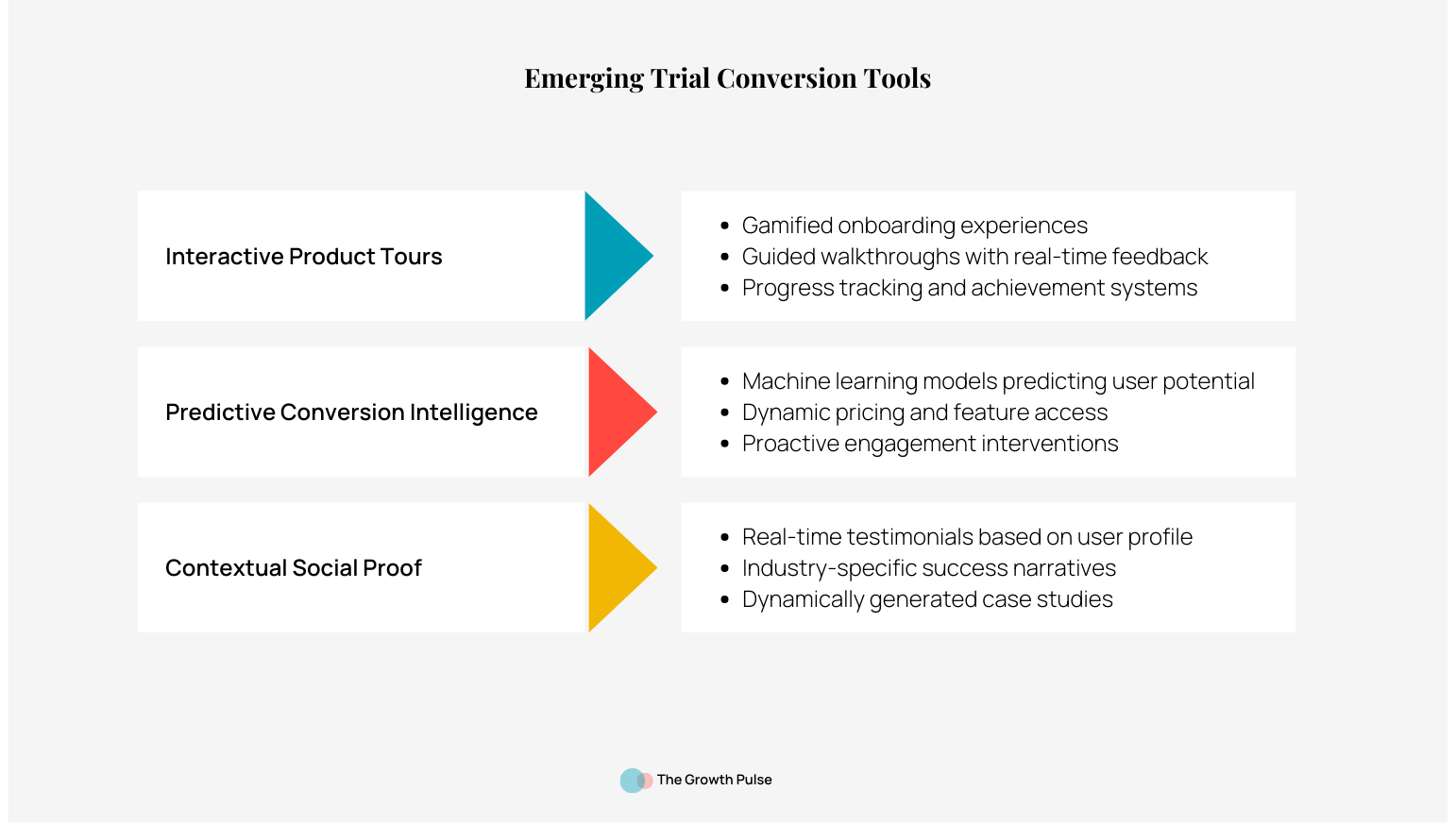
Emerging Conversion Tools
Interactive Product Tours
Gamified onboarding experiences.
Guided walkthroughs with real-time feedback.
Progress tracking and achievement systems.
Predictive Conversion Intelligence
Machine learning models predicting user potential.
Dynamic pricing and feature access.
Proactive engagement interventions.
Contextual Social Proof
Real-time testimonials based on user profile.
Industry-specific success narratives.
Dynamically generated case studies.
With that said…
Trial users are already invested in exploring your product—your job is to ensure they experience undeniable value before their trial expires. By focusing on feature prioritization, reducing time-to-value, optimizing engagement loops, and making conversion seamless, product leaders can significantly improve their free trial-to-paid conversion rates.
Now, over to you: What strategies have you seen work best for trial conversions? Let’s discuss!